

Canadian film festivals pulse with an energy that transforms cinema from passive entertainment into urgent cultural conversation. From the glittering premieres of the Toronto International Film Festival to the vital Indigenous voices amplified at imagineNATIVE, these gatherings showcase stories that challenge, inspire, and reshape how we understand our nation’s complex identity.
These festivals aren’t simply screening events—they’re platforms where marginalized voices claim space, where documentary filmmakers expose injustice, where experimental artists push boundaries, and where communities gather to see their lived experiences reflected on screen. Whether spotlighting Francophone cinema at FIFA, celebrating women directors at the Reelworld Film Festival, or elevating LGBTQ2S+ narratives at Inside Out, Canadian festivals demonstrate an unwavering commitment to representation that extends far beyond tokenism.
What makes these festivals particularly significant in 2023 is their role as cultural anchors during a period of intense social reckoning. They’ve become essential spaces where conversations about reconciliation, climate justice, racial equity, and queer liberation unfold through the transformative power of storytelling. For filmmakers, they offer career-launching opportunities and vital networking. For audiences, they provide access to films that commercial distributors overlook—stories that demand attention precisely because they disrupt comfortable narratives.
Understanding Canada’s festival landscape means recognizing how these events collectively build a more inclusive, critically engaged film culture that honors diverse perspectives while nurturing the next generation of visionary storytellers.
Why 2023 Was a Watershed Year for Canadian Film Festivals
The year 2023 marked a turning point for Canadian cinema, signaling a vibrant resurgence that extended far beyond simply bouncing back from pandemic-era closures. Across the country, film festivals experienced record attendance, renewed energy, and a palpable sense of cultural reclamation. What made this year particularly significant wasn’t just the return of audiences to theatres, but the transformation in how Canadian stories were being told and celebrated.
Post-pandemic film festivals adapted by embracing hybrid models that expanded accessibility while maintaining the communal magic of in-person screenings. This evolution meant that Canadian filmmakers could reach audiences coast to coast, breaking down geographical barriers that had long limited who could participate in festival culture. The result was a more inclusive landscape where voices from remote communities, Indigenous storytellers, and emerging creators from diverse backgrounds found platforms they’d been historically denied.
What truly distinguished 2023 was the industry’s conscious commitment to diversity and inclusion moving from aspiration to action. Festivals prioritized programming that reflected the nation’s multicultural fabric, with significant increases in films directed by women, BIPOC creators, LGBTQ2S+ filmmakers, and disabled artists. This wasn’t tokenism but a fundamental shift in recognizing whose stories deserve centre stage.
This watershed moment aligns perfectly with Eye For Details’ founding vision of transforming perceptions about Canadian cinema. For too long, our film culture has been overshadowed by tired stereotypes or dismissed as lacking the polish of Hollywood productions. Yet 2023 demonstrated that Canadian filmmakers are crafting compelling, authentic narratives that resonate globally while remaining rooted in our distinct cultural identity. The festivals became gathering places where communities could see themselves reflected on screen, where difficult conversations about social justice could unfold through art, and where the next generation of storytellers found inspiration and mentorship.

Toronto International Film Festival (TIFF): Canada’s Global Stage
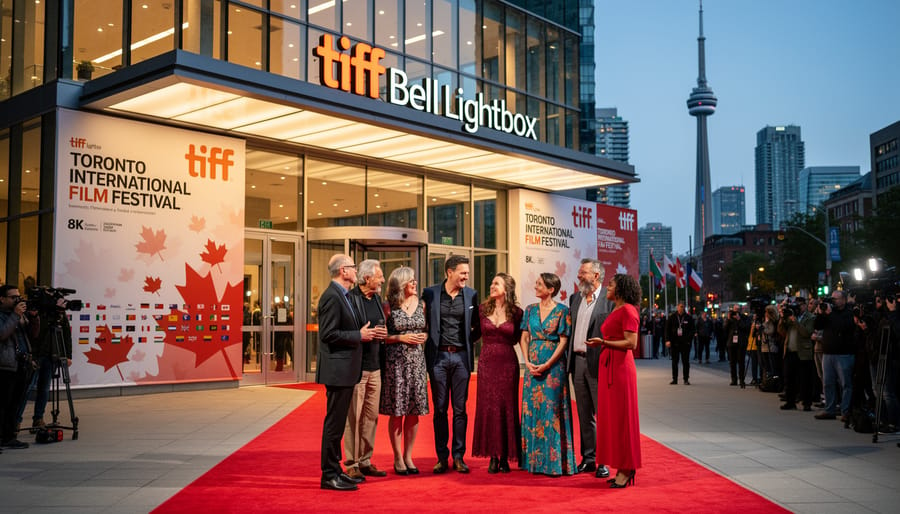
Standing tall among the world’s most prestigious film festivals, the Toronto International Film Festival has become Canada’s most powerful platform for connecting homegrown stories with international audiences. Each September, TIFF transforms Toronto into a global cinema hub, and in 2023, the festival demonstrated an unwavering commitment to elevating Canadian voices while pushing boundaries in accessibility and representation.
The 2023 edition showcased an impressive array of Canadian talent across all program streams. From thought-provoking documentaries exploring Indigenous sovereignty to boundary-pushing dramas examining immigrant experiences, TIFF’s Canadian programming reflected the true diversity of our nation’s storytelling landscape. The festival didn’t just screen these films—it celebrated them, providing Canadian filmmakers with red carpet premieres and industry access typically reserved for Hollywood productions.
What sets TIFF apart is its dedication to democratizing the festival experience. The 2023 festival expanded its accessibility initiatives, offering films with open captions, audio description, and sensory-friendly screenings. Digital offerings allowed audiences across Canada to participate, breaking down geographical barriers that have historically limited festival access to urban centres. These efforts align with a vision of cinema as a shared cultural experience, not an exclusive one.
TIFF’s commitment to emerging voices particularly resonates with its role as a launching pad for new talent. The festival’s Short Cuts programme and talent development initiatives provide crucial platforms for filmmakers from underrepresented communities, including BIPOC creators, 2SLGBTQ+ storytellers, and women directors. Many Canadian filmmakers who’ve gone on to international recognition got their start at TIFF, proof that the festival serves as both showcase and incubator.
Perhaps most significantly, TIFF functions as a bridge. It introduces global audiences to distinctly Canadian perspectives while bringing international cinema conversations back to Canadian soil. When a Canadian film premieres at TIFF, it’s not just another screening—it’s a statement that our stories matter on the world stage. The festival proves that Canadian cinema doesn’t need to mimic Hollywood to find success; authenticity and cultural specificity are exactly what make these films resonate globally.
Montreal’s Festival du Nouveau Cinéma: Pushing Creative Boundaries
Montreal’s Festival du Nouveau Cinéma stands as a beacon for those who believe cinema should challenge, provoke, and reimagine what’s possible on screen. Since 1971, this bilingual festival has championed experimental and avant-garde work, creating a vital space where filmmakers can push beyond conventional storytelling into uncharted creative territories.
The 2023 edition embraced digital innovation with remarkable enthusiasm, showcasing how technology expands rather than limits artistic vision. Virtual reality experiences transported audiences into immersive narrative worlds, while interactive installations blurred the lines between viewer and participant. These weren’t gimmicks but genuine explorations of how emerging technologies can deepen emotional connection and expand storytelling possibilities.
What makes FNC particularly exciting is its commitment to platforming Canadian filmmakers who refuse to color within the lines. Quebec’s unique cultural position—bridging European sensibilities with North American energy—infuses the festival with a distinctive creative spirit. The programming celebrates this duality, featuring work that feels simultaneously intimate and universal, local and global.
The festival’s bilingual nature isn’t just administrative; it reflects Montreal’s cultural DNA and Quebec’s essential contribution to Canadian cinema. French and English programming coexist dynamically, demonstrating how linguistic diversity enriches rather than divides artistic communities. This approach creates space for filmmakers from different backgrounds to find their audiences while maintaining their authentic voices.
FNC’s emphasis on experimental work serves a crucial purpose in Canada’s film ecosystem. While major festivals often prioritize market-friendly features, FNC provides oxygen for riskier visions that might otherwise struggle to find screens. Short films, video art, hybrid documentaries, and genre-defying projects all find welcome here.
For emerging filmmakers, the festival offers inspiration and permission to experiment. Seeing bold, unconventional work celebrated reminds creators that Canadian cinema isn’t monolithic—there’s room for every vision, every voice, every approach. This festival proves that pushing boundaries isn’t self-indulgent; it’s how art evolves and cultures stay vibrant.
Vancouver International Film Festival: Bridging Pacific Voices
Perched on the edge of the Pacific, the Vancouver International Film Festival has carved out a remarkable niche as Canada’s premier cinematic bridge between cultures. For over four decades, VIFF has championed stories that reflect the rich tapestry of voices spanning the Pacific Rim, making it an essential gathering place for filmmakers and audiences seeking authentic cross-cultural dialogue.
The 2023 edition showcased this commitment brilliantly, with programming that placed Indigenous storytellers and Asian-Canadian creators front and center. The festival’s Indigenous strand featured powerful works that explored land sovereignty, cultural resilience, and intergenerational healing—themes that resonated deeply with VIFF’s broader environmental focus. These weren’t peripheral selections but cornerstone programming that recognized Indigenous cinema as vital to understanding Canadian identity.
Asian-Canadian narratives flourished throughout the festival, offering nuanced portraits of diaspora experiences that defied easy categorization. From intimate family dramas exploring generational divides to bold experimental works reimagining cultural identity, these films demonstrated the creative vitality emerging from hyphenated experiences. The festival’s deliberate curation created conversations between seemingly disparate works, revealing unexpected connections between Korean-Canadian, Filipino-Canadian, and Chinese-Canadian storytelling traditions.
Environmental themes threaded through much of the programming, reflecting both regional concerns and global urgency. Films examining climate change, Indigenous land stewardship, and sustainable futures found natural alignment with the Pacific Northwest’s environmental consciousness. This wasn’t issue-driven programming for its own sake but rather a recognition that environmental justice and cultural survival are inseparable concerns.
What makes VIFF particularly special is its refusal to treat cultural exchange as a one-way street. Rather than simply importing Asian cinema or exporting Canadian works, the festival creates genuine dialogue—screening rooms where Vancouver’s diverse communities see themselves reflected and where visitors discover new perspectives. This approach transforms the festival from a mere showcase into a living conversation about identity, belonging, and shared futures across the Pacific.
imagineNATIVE Film + Media Arts Festival: Centering Indigenous Stories
Every October, Toronto transforms into a gathering space for Indigenous storytellers from across the globe. ImagineNATIVE Film + Media Arts Festival stands as the world’s largest Indigenous festival dedicated to film and media arts, presenting an extraordinary range of perspectives that challenge colonial narratives and reclaim Indigenous representation in cinema.
The 2023 festival continued its powerful tradition of centering voices that mainstream media has historically marginalized. Over five days, audiences experienced more than 100 films, installations, and digital media works created by Indigenous artists from Canada, the United States, Australia, New Zealand, and beyond. The programming spanned documentary, narrative features, experimental shorts, and virtual reality experiences, each offering unique insights into contemporary Indigenous life, traditional knowledge, and the ongoing journey toward decolonization.
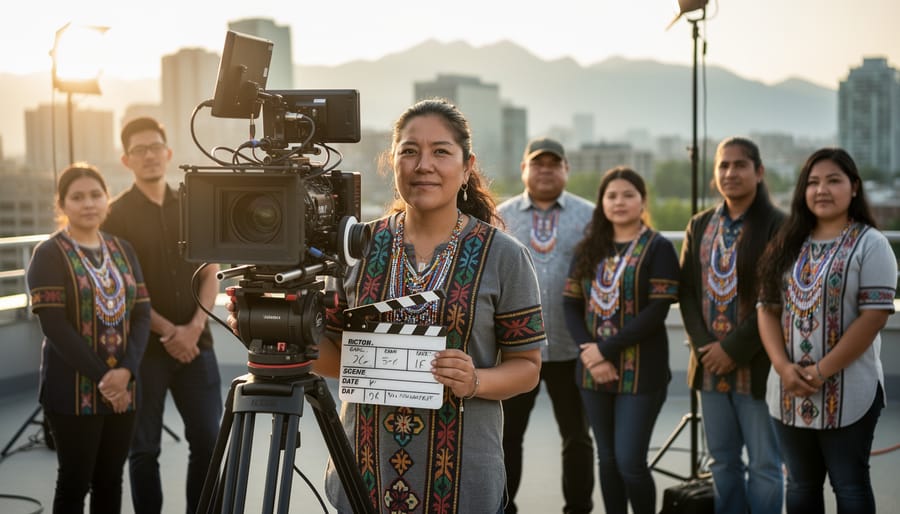
What makes imagineNATIVE particularly significant is its unwavering commitment to Indigenous-led curation and decision-making. Unlike festivals where Indigenous content becomes a curated category within a larger program, imagineNATIVE places Indigenous filmmakers, stories, and worldviews at the absolute center. This approach doesn’t just provide visibility—it creates a space where Indigenous artists control their own narratives, engage with their communities on their own terms, and define what cinematic excellence means from their cultural perspectives.
The festival serves a crucial role in cultural preservation and knowledge transmission. Many films feature Indigenous languages, traditional practices, and intergenerational wisdom shared between Elders and youth. These aren’t museum pieces frozen in time—they’re living, breathing stories that connect ancestral knowledge with contemporary realities, from climate activism to urban Indigenous experiences.
For emerging filmmakers, imagineNATIVE offers mentorship programs, industry sessions, and networking opportunities specifically designed to support Indigenous creators navigating an industry that hasn’t always welcomed them. The festival’s Industry Series connects artists with producers, distributors, and funding bodies, building pathways toward sustainable careers in film and media.
Beyond artistic celebration, imagineNATIVE embodies social justice in action. By providing platforms for stories about land rights, residential school legacy, missing and murdered Indigenous women, and cultural resurgence, the festival educates non-Indigenous audiences while affirming Indigenous communities’ experiences and resilience.
Regional Festivals Making National Impact
Atlantic Film Festival: Maritime Stories, National Resonance
Where the Atlantic Ocean meets the screen, the Atlantic Film Festival in Halifax has been showcasing maritime stories that ripple across the nation since 1980. In 2023, this vital platform continued its mission of amplifying Atlantic Canadian voices while proving that regional storytelling carries universal power.
The festival’s 2023 programming reflected the rugged beauty and complex realities of coastal life. Films exploring fishing communities, climate change impacts on maritime provinces, and the cultural heritage of Indigenous and Acadian populations took center stage. These weren’t just local stories—they were intimate explorations of resilience, community, and identity that resonated far beyond the Atlantic provinces.
What makes the Atlantic Film Festival particularly special is its commitment to accessibility and mentorship. The festival creates pathways for emerging Atlantic Canadian filmmakers through its training programs and industry sessions, ensuring that storytelling from the region remains vibrant and sustainable. This investment in creative communities strengthens Canadian cinema as a whole, bringing fresh perspectives from voices often underrepresented in mainstream media.
The 2023 edition also emphasized connections between Atlantic filmmakers and national audiences, demonstrating how stories rooted in specific maritime experiences—the rhythm of tides, the intimacy of small communities, the relationship between land and sea—speak to broader Canadian themes of place, belonging, and environmental stewardship. By celebrating these distinctly Atlantic narratives, the festival enriches our understanding of Canada’s diverse cultural landscape and reminds us that powerful stories emerge from every corner of our nation.
Calgary International Film Festival: Celebrating Prairie Perspectives
The Calgary International Film Festival (CIFF) stood out in 2023 as a vital platform for amplifying Western Canadian voices often underrepresented in national cinema conversations. Celebrating its commitment to prairie perspectives, the festival showcased films that captured the unique rhythms, landscapes, and cultural mosaic of Alberta and the surrounding regions.
This year’s programming deliberately centered stories from Indigenous filmmakers, immigrant communities, and rural storytellers whose experiences reflect the province’s evolving identity. From documentaries exploring agricultural heritage to fiction films examining urban Indigenous experiences in Calgary and Edmonton, CIFF created space for narratives that challenge monolithic representations of Western Canada.
The festival’s industry initiatives proved equally significant, offering emerging Alberta filmmakers mentorship opportunities, pitch sessions, and networking events that strengthened the province’s creative infrastructure. These programs recognized that sustainable storytelling ecosystems require both audience engagement and professional development.
What distinguished CIFF in 2023 was its refusal to treat regional cinema as secondary to Toronto or Montreal productions. Instead, the festival celebrated prairie filmmaking as essential to understanding Canada’s full cultural landscape, proving that diverse geographic perspectives enrich our collective understanding of what Canadian cinema can be.
Inside Out Toronto: Championing 2SLGBTQ+ Cinema
Since 1991, Inside Out Toronto has created vital space for 2SLGBTQ+ voices in Canadian cinema, evolving into the country’s largest festival dedicated to queer and trans storytelling. The festival’s 2023 edition doubled down on its commitment to homegrown talent, spotlighting an impressive roster of queer and trans Canadian filmmakers whose work challenges conventions while celebrating authentic lived experiences.
What sets Inside Out apart is its intentional focus on community-building alongside film exhibition. The 2023 program featured powerful works that ranged from intimate documentaries exploring Indigenous two-spirit identities to bold narrative features centered on trans experiences. These films didn’t just entertain—they created dialogue, offered representation, and provided mirrors for audiences who rarely see themselves on screen.
The festival’s programming choices reflect a deep understanding that 2SLGBTQ+ cinema encompasses diverse perspectives, not a monolithic experience. By centering Canadian creators, Inside Out ensures that distinctly Canadian queer narratives—shaped by our multicultural landscape and evolving social contexts—find their audience. For emerging filmmakers, the festival offers mentorship opportunities and platforms that can launch careers, making it an essential incubator for the next generation of storytellers committed to inclusive, boundary-pushing cinema.
How These Festivals Are Building Community Beyond the Screen
Canadian film festivals have become vital gathering spaces where the magic happens not just on screen, but in the conversations, connections, and collaborations they spark. These events are reimagining what community looks like in an increasingly digital world, creating opportunities for filmmakers and audiences to connect face-to-face in meaningful ways.
At the heart of this community-building effort are robust educational programs that democratize filmmaking knowledge. The Toronto International Film Festival’s Industry Conference brings together emerging and established filmmakers for intensive workshops covering everything from financing strategies to distribution in the streaming age. Meanwhile, smaller festivals like the imagineNATIVE Film + Media Arts Festival offer targeted mentorship programs pairing Indigenous youth with seasoned storytellers, ensuring traditional knowledge and contemporary techniques flow between generations.
Industry panels at festivals across the country tackle pressing questions facing Canadian cinema today. How do we create sustainable careers in independent film? What does authentic representation really mean? These conversations don’t just inform—they inspire action and accountability within the filmmaking community.
Perhaps most powerfully, festivals are breaking down the traditional barriers between creators and audiences. Q&A sessions following screenings transform passive viewing into active dialogue, allowing filmmakers to hear directly how their stories resonate. Many festivals now incorporate community screenings in underserved neighborhoods, ensuring that Canadian cinema reflects and reaches all Canadians, not just those with festival passes.
Networking events, filmmaker lounges, and collaborative workshops create informal spaces where partnerships form organically. A documentary maker from Halifax might connect with an animator from Vancouver, sparking a project neither could have imagined alone. These serendipitous encounters remind us that storytelling thrives on collaboration and diverse perspectives.
For Canadian filmmakers, particularly those from marginalized communities, festivals provide more than exhibition opportunities—they offer validation, resources, and a sense of belonging to something larger than any single project. This ecosystem of support ensures that Canadian stories continue to flourish, both on screen and in the vibrant communities these festivals nurture year-round.

What These Festivals Reveal About Canadian Identity
Canada’s film festivals in 2023 offered far more than entertainment—they served as mirrors reflecting the nation’s evolving soul. Across screens from coast to coast, recurring themes emerged that speak volumes about what it means to be Canadian today. These festivals collectively showcased stories that grapple with reconciliation, celebrate multiculturalism, confront climate anxiety, and champion social justice in ways that feel distinctly rooted in the Canadian experience.
Indigenous voices claimed unprecedented space throughout festival programming this year, moving beyond token representation to genuine celebration and platform-sharing. Films exploring residential school legacies, land rights, and contemporary Indigenous creativity weren’t relegated to specialized slots but featured prominently in opening galas and competition categories. This shift signals a cultural reckoning happening in real-time, with festivals becoming active participants in truth and reconciliation rather than passive observers.
The environmental crisis emerged as another defining thread, with documentaries and dramas alike examining humanity’s relationship with the natural world. Given Canada’s vast landscapes and resource-dependent economies, these films don’t approach climate change as abstract concept but as immediate, lived reality affecting communities from the Arctic to coastal regions.
Multiculturalism—often discussed as Canadian ideal—found authentic expression through immigrant narratives, refugee experiences, and diaspora stories that explored belonging without demanding assimilation. These weren’t simplistic celebration pieces but nuanced examinations of identity negotiation, generational tensions, and the beautiful complexity of hyphenated existence.
Social justice themes wove through programming choices themselves, with festivals prioritizing accessibility, gender parity in selections, and compensating Indigenous advisors and jury members. The stories on screen reflected marginalized perspectives—2SLGBTQ+ experiences, disability narratives, working-class struggles—demonstrating that Canadian identity isn’t monolithic but magnificently varied.
Together, these festivals paint a portrait of a nation unafraid to examine its contradictions, celebrate its diversity, and use storytelling as a tool for understanding and transformation.
Canadian film festivals are far more than screening venues—they’re living, breathing ecosystems where stories find audiences, filmmakers discover their voice, and communities forge meaningful connections. These platforms have fundamentally reshaped how we understand Canadian cinema, moving it from the margins to the center of cultural conversation. They’ve proven that our stories, told in our distinct voices and reflecting our wonderfully complex society, resonate powerfully both at home and internationally.
The transformative impact of these festivals extends beyond the screen. They create spaces where Indigenous filmmakers reclaim narrative sovereignty, where newcomers share their settlement experiences, where LGBTQ+ voices challenge norms, and where regional perspectives enrich our national dialogue. Each festival season brings fresh perspectives that expand our collective understanding of what it means to be Canadian in all its beautiful complexity.
Now it’s your turn to participate in this cultural movement. Attend a festival near you—whether it’s a major event in a bustling city or an intimate gathering in your community. Purchase tickets, engage in post-screening discussions, and share what moves you on social media. Support Canadian filmmakers by watching their work, recommending films to friends, and advocating for Canadian content. If you’re an educator, incorporate these films into your curriculum. If you’re a student, organize screening events on campus.
The future of Canadian cinema is bright, diverse, and brimming with untold stories waiting to unfold. By engaging with film festivals, you’re not just watching movies—you’re actively shaping a cultural landscape that celebrates authenticity, champions underrepresented voices, and builds bridges across communities. Join the conversation. The screen awaits.