
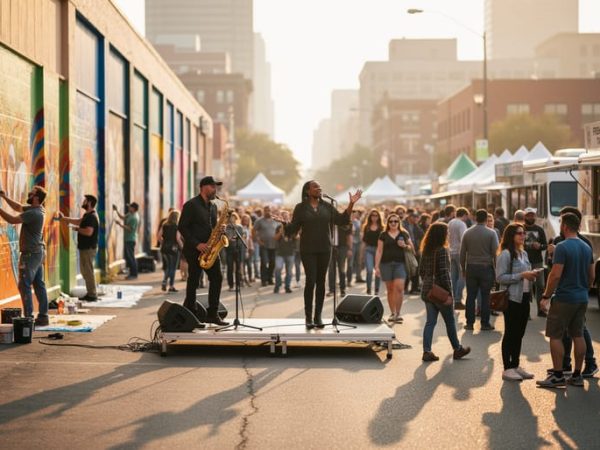
Downtown urban arts festivals transform city streets into vibrant, open-air galleries where music, visual art, dance, spoken word, and performance converge to celebrate the creative pulse of a community. These events matter because they democratize cultural access, removing the barriers of admission fees and institutional intimidation to invite everyone into shared creative experiences. They function as catalysts for neighbourhood revitalization, economic activity, and social cohesion, turning underutilized public spaces into stages for both established and emerging artists.
Across Canada, from Vancouver’s alleys to Montreal’s plazas and Toronto’s waterfronts, these festivals have become essential fixtures in the urban cultural calendar. They reflect the diversity of the communities they serve, showcasing Indigenous artists alongside newcomer voices, amplifying stories that traditional galleries and concert halls sometimes overlook. A downtown arts festival might feature muralists painting live on warehouse walls while a few blocks away a hip-hop cypher forms around a beatboxer, and food vendors from a dozen cultural backgrounds feed the crowds.
The social impact extends beyond the festival weekend itself. Local businesses see increased foot traffic, artists gain exposure and income, and residents discover creative practices they never knew existed in their own neighbourhoods. For participants, whether as audience members, vendors, or performers, these festivals offer tangible proof that art belongs to everyone and that culture thrives when it spills out of closed rooms and into the streets where people live, work, and gather.
What Makes Downtown Urban Arts Festivals Essential to City Life
Downtown urban arts festivals do something remarkable: they reclaim city streets and public squares as shared creative commons where cultural expression becomes accessible to everyone, not just those who can afford gallery admission or theatre tickets. These events break down the invisible barriers that often keep the arts confined to institutional spaces, bringing creativity directly into the flow of everyday urban life.
When a festival transforms a downtown core, it creates what urban planners call “activation”, but the impact goes far deeper than foot traffic metrics. These gatherings generate temporary communities where strangers connect through shared wonder at a street performance, where families discover new cultural traditions, and where artists from different backgrounds collaborate in real time. A mural painted during the festival becomes a lasting landmark. A dance performance on a public stage introduces movement traditions that audience members have never encountered. The festival creates permission for people to slow down, look around, and engage with their city differently.
These festivals remind us that culture isn’t something locked behind doors, it’s alive in our streets, shaped by every voice that participates.
The democratizing effect cannot be overstated. A teenager walking home from school encounters experimental theatre. An office worker on lunch break stumbles into a pop-up gallery featuring Indigenous artists. Seniors who might never visit a contemporary art museum find themselves engaged in conversation with installation creators. This accessibility matters profoundly in Canadian cities where cultural institutions have historically centred certain voices while marginalizing others.
Beyond immediate enjoyment, these festivals reshape how residents understand their urban environment. Concrete plazas become performance venues. Underused alleys transform into gallery spaces. The festival proves that downtowns can be gathering places for celebration and creativity, not just commerce and commuting. That reimagining often persists long after the festival banners come down, inspiring communities to demand more vibrant, culturally rich public spaces year-round.
The Elements That Define a Thriving Downtown Arts Festival
Multi-Disciplinary Programming That Reflects Community
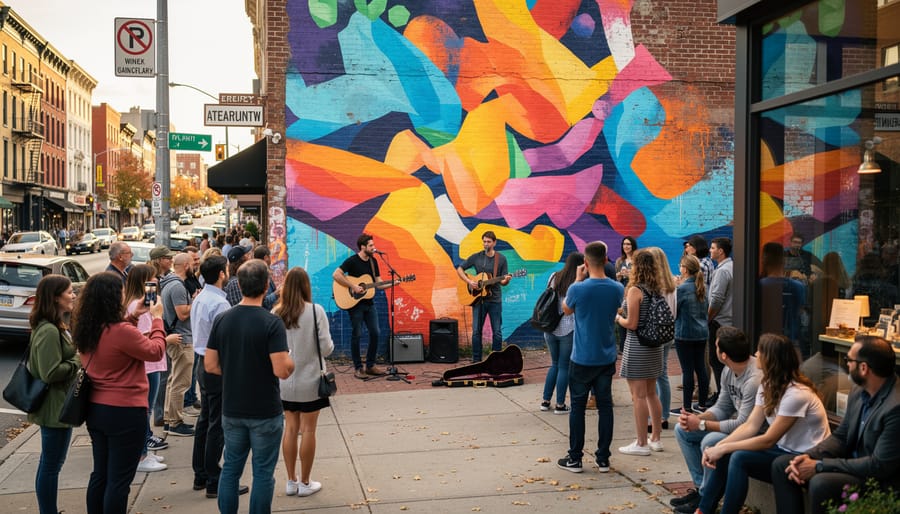
The most compelling downtown urban arts festivals resist single-genre categorization. They weave together visual exhibitions, live performances, street theatre, Canadian film festivals screenings, musical acts, and participatory installations into layered experiences that mirror the complexity of the communities they serve. A mural unveiling might happen alongside a spoken word performance, while an Indigenous dance ceremony unfolds steps away from an electronic music set. This intentional blending creates moments where different audiences intersect, discovering art forms they might never seek out independently.
Strong diverse festival programming reflects demographic reality rather than curatorial preference. When organizers actively seek artists from immigrant communities, disability advocates, LGBTQ2S+ collectives, and regional practices, the resulting program becomes a living portrait of urban Canada. The visual language shifts from booth to booth: contemporary Indigenous beadwork appears near Afro-Caribbean textile work, Punjabi folk dancers share stages with experimental theatre troupes. This isn’t diversity as checkbox exercise but as authentic representation of who creates art in Canadian cities today. Audiences see themselves reflected, while discovering perspectives that expand their understanding of both art and community.
Creating Space for Emerging and Established Artists
Successful downtown urban arts festivals create tiered programming structures that serve both established Canadian artists and emerging creators simultaneously. Headliners draw crowds and generate media attention, while curated emerging artist showcases leverage that visibility to introduce new voices to audiences who might not otherwise discover them. Many festivals now reserve dedicated time slots, prime outdoor spaces, or featured gallery positions specifically for artists from Indigenous, Black, immigrant, and other marginalized communities whose work has historically faced barriers to mainstream platforms.
The most effective festivals go beyond simple stage access by pairing emerging artists with mentorship opportunities, technical support, and professional development workshops. This might include subsidized equipment rentals, access to festival marketing channels, or introductions to curators and producers. These bridges between artists at different career stages create knowledge exchange that benefits the entire ecosystem, while ensuring the financial sustainability of festivals through headline draws.
Programming committees increasingly include artists from diverse backgrounds in selection processes, which shifts not just who gets featured but how artistic merit itself is defined and recognized. This structural change ensures festivals genuinely reflect the communities they serve rather than simply repeating established hierarchies under the banner of inclusion.
Community Co-Creation and Participatory Elements
The most transformative downtown festivals dissolve the boundary between stage and street, inviting attendees to shape the event itself. Interactive murals that grow throughout the weekend, community storytelling circles where anyone can share their narrative, and collaborative art-making stations turn observers into co-creators. At a thriving urban arts festival you might screen-print your own design onto fabric that becomes part of a collective installation, or add your voice to a recorded soundscape mapping the city’s sonic identity.
These participatory elements do more than democratize access, they fundamentally shift how communities understand cultural production. When a teenager sees their chalk art preserved in the festival’s digital archive, or a newcomer contributes a recipe to a pop-up community cookbook project, they recognize themselves as legitimate cultural contributors. Workshops led by local artists, from Indigenous beading circles to hip-hop cipher sessions, create intimate spaces for skill-sharing and relationship-building that outlast the festival itself. This co-creation model ensures festivals reflect authentic community voices rather than imposing external artistic visions onto neighbourhoods.
How These Festivals Champion Canadian Stories and Perspectives
Downtown urban arts festivals have become powerful platforms for amplifying voices that have historically been marginalized in mainstream Canadian cultural spaces. These events don’t just present art, they actively challenge whose stories get told, who gets to tell them, and how diverse Canadian experiences are woven into the national conversation.
Indigenous artists find in these festivals crucial opportunities to reclaim narrative control and present contemporary work that moves beyond stereotypical representations. When festivals commission site-specific installations by Indigenous creators or centre Indigenous-led performances in downtown venues, they’re making visible statements about who belongs in urban cultural spaces. These aren’t token gestures; they’re acts of reshaping stories and redefining what Canadian art looks like.
Similarly, newcomer and immigrant artists use festival platforms to explore hyphenated identities, translating experiences of displacement, belonging, and cultural fusion into works that resonate across communities. A Syrian-Canadian visual artist might create murals that blend Arabic calligraphy with urban graffiti aesthetics. A Filipino performance collective might stage pieces examining colonial histories through contemporary dance. These expressions enrich Canada’s cultural fabric while providing immigrant communities with reflections of their own experiences in public spaces.
Festivals can spotlight Canadian narratives through various artistic mediums:
- Documentary film screenings examining regional histories and contemporary social issues
- Spoken word performances exploring identity, belonging, and the immigrant experience
- Visual art installations addressing reconciliation, environmental justice, and urban Indigenous presence
- Theatre productions in multiple languages reflecting Canada’s linguistic diversity
- Music showcases featuring genres rooted in diaspora communities
Regional voices also gain traction through these urban festivals. Artists from smaller Canadian communities bring perspectives shaped by geography, economy, and distinct local cultures. A Newfoundland storyteller, a Prairie multimedia artist, or a Northern filmmaker can reach audiences who might never encounter their work otherwise.
What makes this championing effective isn’t just representation, it’s the quality of attention these festivals demand. When a downtown arts festival positions Indigenous perspectives at its centre rather than its margins, when it compensates artists fairly and provides genuine curatorial support, it signals that these stories matter. The festival becomes a space where diverse Canadian realities aren’t just acknowledged but celebrated as essential to understanding who we are collectively.
The Social Impact Beyond the Event
Building Bridges Across Cultural Divides
When different cultural communities gather in downtown public spaces to experience art together, something profound happens. A Syrian refugee watches a Cree dance performance. A third-generation Italian-Canadian encounters spoken word poetry from a Somali-Canadian youth. An elderly Cantonese speaker stands beside a Punjabi teenager, both moved by the same large-scale mural unveiling. These moments create what structured social programs often struggle to achieve: genuine human connection built on shared wonder rather than obligation.
Urban arts festivals dismantle the invisible walls between communities by offering neutral ground where cultural exchange feels natural and joyful. Unlike formal diversity initiatives, these events let people discover commonalities through emotional responses to creativity. A parent from any background recognizes the universal pride when children perform. Audiences from different neighbourhoods laugh together at physical theatre that transcends language barriers. Music becomes a conversation that requires no translation.
The festivals that stay on every creative’s radar understand this bridging power and design programming intentionally to maximize cross-cultural encounters, creating lineups that reflect the full spectrum of urban diversity while maintaining artistic excellence that commands respect across all communities.
Activating Public Spaces for Year-Round Cultural Engagement
Successful downtown festivals don’t just occupy public spaces for a weekend, they fundamentally alter how communities perceive and inhabit these areas long after the stages come down. When a previously underutilized plaza hosts a transformative arts experience, residents begin seeing it differently: not as empty space to rush through, but as a venue with cultural potential.
Cities like Vancouver and Montreal have witnessed this shift firsthand. Festivals prove that downtowns can be more than commercial districts. They demonstrate what’s possible, inspiring local cultural organizations to program pop-up performances, outdoor exhibitions, and community gatherings throughout the year. A fountain that hosted projection art during a festival might become a summer concert venue. A parking lot transformed into an installation space might spark conversations about permanent public art.
This cascading effect reshapes urban planning conversations too. When thousands gather safely and joyfully in reclaimed spaces, city councils take notice. Temporary pedestrian zones become permanent. Budgets for public art increase. Communities start demanding year-round activation, not just during scheduled festivals, creating vibrant cultural ecosystems where Canadian creativity thrives in the spaces we share.
Getting Involved: For Artists, Organizers, and Audiences
Downtown urban arts festivals thrive when communities actively participate, and there’s a place for everyone in this vibrant ecosystem. Whether you’re an artist seeking a platform, an organizer building cultural infrastructure, or an audience member wanting to engage more deeply, here’s how to step into your local festival scene.
- Research your local festival calendar and subscribe to newsletters from cultural organizations in your area, many festivals announce artist calls and volunteer opportunities months in advance.
- Attend festivals consistently and connect with organizers during events. Introduce yourself, ask questions about programming decisions, and express your interest in contributing.
- Start small by volunteering for setup, artist hospitality, or crowd management. These roles provide insider perspectives and build relationships within the organizing community.
- For artists, prepare a strong portfolio that demonstrates both your artistic vision and your ability to engage diverse audiences. Many festivals prioritize work that sparks conversation.
- Join local arts councils, cultural committees, or community groups that feed into festival programming. These networks often shape which voices get amplified.
Artists should note that festival applications typically open six to twelve months before events. Beyond submitting work for film screenings gallery installations, or performance slots, consider proposing workshops or interactive elements that invite audience participation.
Audience members can support festivals by attending consistently, sharing events within your networks, and purchasing work directly from artists. Many festivals operate on tight budgets, so ticket purchases and donations directly impact their ability to compensate artists fairly and return year after year. Engage genuinely with the art, ask artists about their process, participate in post-performance discussions, and challenge yourself to experience art forms outside your comfort zone.
Downtown urban arts festivals represent more than weekend entertainment. They stand as living proof that Canadian communities thrive when diverse voices gather in shared creative spaces. These events transform concrete plazas and city streets into canvases where Indigenous knowledge-keepers, newcomer artists, and established creators exchange stories that reshape how we understand ourselves and each other.
The festivals covered throughout this article demonstrate that cultural expression fuels community resilience. When a downtown block closes for art installations and performances, it opens pathways for dialogue across differences that might otherwise remain unspoken. These gatherings remind us that Canadian identity isn’t static, it evolves through every mural painted, every performance witnessed, every conversation sparked between strangers who become neighbours.
The lasting impact extends far beyond the final stage breakdown. Relationships formed, perspectives shifted, and spaces reclaimed during these festivals continue rippling through communities long after the crowds disperse. Artists find new collaborators. Youth discover creative paths forward. Residents rediscover downtown cores as places of belonging rather than transit.
Your participation matters. Attend the next festival in your city. Volunteer. Support local artists whose work moves you. Advocate for municipal funding that sustains these cultural gathering places. These festivals only exist because people show up, contribute, and insist that art belongs to everyone. Be one of them. Let your presence add another thread to the vibrant tapestry of Canadian urban culture.